The General Office of the Provincial Government issues a notice on further strengthening
Notice on Several Measures for the Supervision of the Whole Chain of Food Safety
(Su Zheng Ban Fa [2025] No. 47)
To the people's governments of various cities, counties (cities, districts), provincial committees, offices, departments, and directly affiliated units of the province:
The Measures for Further Strengthening the Supervision of the Whole Chain of Food Safety have been approved by the Provincial People's Government and are now issued to you. Please implement them carefully based on the actual situation.
Office of the People's Government of Jiangsu Province
December 24, 2025
(This article has been edited)
Regarding further strengthening food safety
Several measures for full chain supervision
In order to further strengthen the supervision of the entire food safety chain and firmly establish every line of defense from farmland to dining table, combined with the actual situation in Jiangsu, the following measures are formulated.
1、 Strengthen the supervision of edible agricultural products
(1) Strengthen risk control at the source. Promote the traceability and remediation of heavy metal pollution in agricultural land soil, prevent and control water pollution in river basins, strengthen the management of agricultural land classification lists and the monitoring and management of large-scale planting and breeding water use. Standardize the management and use of agricultural inputs. Carry out targeted measures to address the prominent issue of drug residues in key problem varieties. Strengthen the inspection and monitoring of high-risk real estate products and key problematic products, and promote rapid detection of drug residue colloidal gold. Trial implementation of quality and safety origin classification supervision for edible agricultural products. Strengthen the quality and safety monitoring of edible forest products.
(2) Strengthen the connection between origin approval and market access. Implement the relevant regulations on the management of commitment compliance certificates, establish an electronic certificate issuance system, and promote the use of electronic certificates. Strengthen the guidance, supervision, and inspection of the issuance, collection, and preservation of commitment compliance certificates. Urge the operators of centralized trading markets for edible agricultural products to strictly enter and inspect, and encourage online trading platforms to present certificates of compliance when selling edible agricultural products. Establish a collaborative mechanism for reporting and investigating issues related to compliance certificates, and improve the closed-loop disposal process for non-conforming products.
(3) Establish a sound traceability management and law enforcement cooperation mechanism. Promote the construction of a full chain traceability platform for edible agricultural products, expand the coverage of network traceability for planting, breeding, and purchasing entities, encourage conditional agricultural and wholesale markets to carry out system docking and data sharing, and implement full traceability for agricultural products listed in the traceability catalog. Explore the implementation of source coding. Promote cross regional traceability of key edible agricultural products in the Yangtze River Delta region. Deepen the linkage between inspection and crackdown on edible agricultural products, "daily patrol+night inspection", and execution linkage.
(4) Strengthen the supervision of meat and aquatic products. Promote the paperless issuance of animal product quarantine certificates and meat product quality inspection certificates. Fully implement standardized management of pig slaughter quality and promote centralized slaughter of cattle, sheep, and poultry. Carry out the governance of illegal use of drugs in aquaculture and implement a whitelist system for the use of inputs in aquaculture. Urge market operators to strengthen the inspection of meat and aquatic products upon entry, and increase the supervision and sampling of key aquatic products. Strictly investigate and punish illegal and criminal activities such as meat and its products that have not undergone inspection and quarantine or have failed inspection and quarantine, as well as illegal and indiscriminate slaughter, water and drug injection or injection of other substances into livestock and poultry in accordance with the law.
2、 Strengthen the supervision of food production and operation
(5) Strict review of food production and operation licenses. Divide and adjust the management authority of food production and operation licenses in accordance with the law, and publicize it to the society. Strengthen the linkage between review and management, improve mechanisms for information sharing, work coordination, and negotiation. Guide food production and operation entities to apply for licenses in accordance with the law. Strictly exit management, promptly cancel food production and operation licenses that have expired but have not applied for renewal in accordance with the law, and clean up invalid entities that meet the conditions for cancellation according to authority. Promote the revision of local food safety standards, strengthen the filing of food enterprise standards, and cancel illegal and irregular food enterprise standards in accordance with the law.
(6) Strengthen the supervision of food production safety. Promote the implementation of HACCP system management in large, medium-sized, and key food production enterprises. Build a "full chain+full cycle" governance system for small food workshops. Strengthen the source control of edible agricultural products, imported products, and industrial products, strictly supervise the production, operation, and use of food additives, and regulate the use of food additives in food production, circulation, and catering processes.
(7) Strengthen the supervision of food safety in centralized dining units and tourism related enterprises. Strengthen the food safety education and management of centralized dining units such as schools, elderly care institutions, children's welfare institutions, medical institutions, government agencies, institutions, and enterprises by industry, and strictly investigate the illegal employment behavior of catering employees. Incorporate food safety into the rating and review of scenic spots and hotel star ratings.
(8) Strengthen collaborative management of campus food safety. Strengthen the overall management and guidance of school food safety related work, and consolidate the school's main responsibility. Improve the "Sunshine Canteen" platform, standardize the food procurement process, and promote centralized bidding and procurement of bulk food ingredients. Strengthen the food safety management of off campus daycare institutions, strictly implement the evaluation and exit mechanism for off campus catering units, and increase the inspection of food safety in school bulk ingredient delivery units and surrounding areas. Guide the efficient and standardized operation of parent committees for dietary supervision in primary and secondary schools, as well as kindergartens, and promote random inspections of family committee members entering schools.
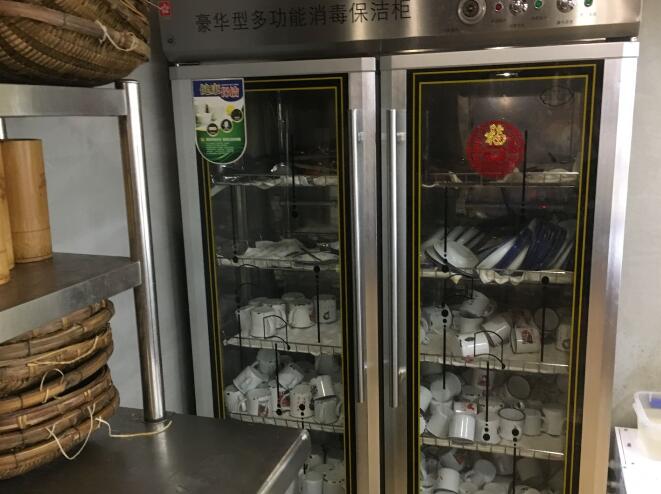
(9) Strengthen the supervision of food related products. Strengthen the supervision and management of centralized disinfection service units for tableware. Establish a comprehensive database of producers of food related products and implement graded supervision of quality and safety risks. Intensify the supervision, inspection, and sampling monitoring of centralized disinfection tableware. Strictly investigate the use of non food grade raw materials and the excessive use of additives in food related products.
(10) Strengthen the supervision of food business safety in new models and scenarios. Encourage entities engaged in food business across provinces using automated equipment to establish operational management institutions or clarify food safety management personnel in their business locations. Strict admission and supervision of new business models such as "unmanned production and sales". Standardize the management of mobile food trucks and external sales points for catering service units.
3、 Establish a collaborative supervision mechanism for food storage, transportation, and delivery
(11) Strengthen the supervision of food storage safety. Establish and improve the storage and supervision system for edible agricultural products, grains, food and raw materials, food additives, imported food, etc. Urge non food producers and operators engaged in food storage business with special requirements for temperature, humidity, etc. to fulfill their main responsibilities. Develop implementation rules for quality and safety management of local government grain and oil reserves, promote the upgrading and renovation of government grain warehouses, and standardize the supervision of grain circulation.
(12) Strengthen collaborative supervision of food transportation. Promote the implementation of the road bulk transportation permit system for key liquid food, explore the construction of an electronic transport manifest management system, and promote the traceability of data throughout the production, transportation, and sales chain of key liquid food in bulk. Strengthen the emergency reserve of transportation capacity to ensure the transportation of food during important periods. Strengthen the storage and transportation management of imported bulk edible vegetable oil.
(13) Strengthen food delivery safety management. Urge delivery enterprises to strengthen the management of food delivery protocol users, promote the application of "Green Shield" project video networking and security check machine networking, and implement the real name receiving and sending, receiving and sending inspection, and machine security check system. Strictly crack down on illegal activities such as sending fake goods by delivery companies and using delivery channels to sell counterfeit and inferior food by operators in accordance with the law.
4、 Strict supervision of online food operations
(14) Strengthen the collaborative governance of new forms of online food sales. Establish a compliance operation guide list for new online food sales formats such as live streaming sales, private domain e-commerce, and community group buying. Strengthen the information dissemination, comprehensive analysis, and collaborative investigation and disposal of food safety issues in online sales, severely crack down on illegal and irregular behaviors such as selling substandard food, false advertising, spreading rumors, fraud, and illegal advertising in accordance with the law, and promote the two-way connection between administrative and criminal penalties.
(15) Consolidate the responsibilities of online food business operators. Urge online trading platforms to establish management institutions in accordance with regulations, allocate full-time food safety management personnel, and implement requirements for qualification review, information disclosure, and process management of network access entities. Promote live streaming e-commerce enterprises to improve their internal management processes and establish a food safety risk prevention and control checklist. Standardize the marketing behavior of live streaming hosts, group buying group owners, and their service organizations, and urge them to fulfill their inspection obligations.
(16) Strengthen the supervision of the entire process of online ordering. We will promote "Internet+AI supervision" and strengthen the inspection and detection, daily supervision and social supervision of takeout without meals. Strictly crack down on "ghost food delivery" and counterfeit food business licenses in accordance with the law. Fully implement the "food safety seal" policy. Based on the "Jiangsu Craftsman Classroom", we have launched courses related to food safety knowledge.
5、 Strengthen the supervision of the specialty food industry
(17) Improve the supervision of special foods. Strictly review the production license of special foods, clarify the review responsibilities of the technical department, and optimize the review process. Strengthen the management of domestic health food registration and promote the "inter provincial integration". Strengthen the filing management of infant formula milk powder raw materials and other matters. Actively strive to carry out pilot projects for the registration and management of domestically produced compound health food. Strictly regulate the marketing activities of health food conferences. Carry out actions to improve the quality of formula foods for special medical purposes and guide medical institutions to standardize their management and use. Based on the special medical formula food training base, carry out specialized training for inspectors of special foods and local specialty foods.
(18) Deepen the supervision of traditional specialty foods. Strengthen the protection of traditional specialty food processing and production techniques, and promote the transformation of the traditional specialty food industry towards standardization, cleanliness, and intelligence. Standardize the management of titles and logo usage such as "Jiangsu Time honored Brand", "Jiangsu Boutique", and "Geographical Indication Product". Encourage traditional specialty food enterprises to develop enterprise standards that are higher than national and industry standards. Enhance the inspection and testing capabilities, testing accuracy, and monitoring response speed of local specialty foods.
6、 Improve the joint prevention and control mechanism for imported food risks
(19) Strengthen the coordinated supervision of imported food. Establish and improve departmental collaboration mechanisms, strengthen risk warning, notification, assessment, disposal, and feedback, and implement mutual recognition of sampling and monitoring results. Establish a traceability mechanism for unqualified imported food and jointly carry out anti smuggling law enforcement inspections. Strengthen the supervision of food production, operation, and storage safety in areas such as comprehensive bonded zones, bonded logistics centers, and bonded warehouses.
(20) Strengthen the supervision of cross-border e-commerce retail imported food. Implement a negative list system for cross-border e-commerce retail imported food, carry out risk monitoring of cross-border e-commerce retail imported food, and organize risk information exchange. Carry out an action to enhance the supervision and recall of imported food in cross-border e-commerce retail, and urge cross-border e-commerce platforms and enterprises to eliminate safety hazards in sold food. Punish the secondary sales of imported food through cross-border e-commerce retail in accordance with the law.
7、 Consolidate the foundational support for collaborative supervision
(21) Build a collaborative regulatory team. Strengthen the professionalization and classification management of the food safety inspector team. Strengthen the continuing education and training assessment of agricultural product quality and safety supervision personnel, and promote the construction of professional investigation forces for food safety violations. Standardize the management of the team of full-time and part-time food safety coordinators at the grassroots level.
(22) Build a collaborative foundational platform. Promote the construction of provincial-level food safety technical support institutions and cultivate a group of "industry-leading and domestically leading" provincial-level food safety laboratories. Improve the infrastructure for food inspection and testing, and promote substantial progress in cutting-edge fields such as identifying potential food safety risks and detecting illegal addition of unknown substances.
(23) Optimize collaborative digital governance. Promote the "Artificial Intelligence+" food safety governance action, and promote the establishment and improvement of the "Artificial Intelligence+Supervision" regulatory system for food production and operation entities. Develop a cross departmental food safety data sharing checklist, rely on public data platforms to support data sharing and exchange, strengthen comprehensive analysis and judgment of regulatory data throughout the entire chain, and improve the algorithm model for food chain risk warning. Strengthen the collaborative innovation of artificial intelligence technology and inspection and testing equipment, promote intelligent means such as unmanned aerial vehicle inspection, visual inspection, and off-site supervision. Enrich the application of intelligent supervision scenarios across the entire chain, explore the creation of food safety AI robots, intelligent question answering systems, and a batch of high-quality food safety datasets.
(24) Strengthen collaborative emergency response. Develop measures for investigating and handling food safety incidents, and revise emergency plans for food safety accidents. Improve regulatory information sharing and feedback mechanisms, strengthen public opinion monitoring and risk prevention. Conduct public opinion simulation exercises and conduct retrospective analysis of typical cases. Strengthen science popularization and publicity, improve the collaborative mechanism for rumor management, crack down on malicious speculation in accordance with the law, and create a rational and healthy public opinion environment for food safety.