-
E-mail
mike@sgnprocess.com
-
Phone
13681679740
-
Address
900 Zhudai Road, Jiading District, Shanghai
Product Categories
Shanghai Sijun Machinery Equipment Co., Ltd
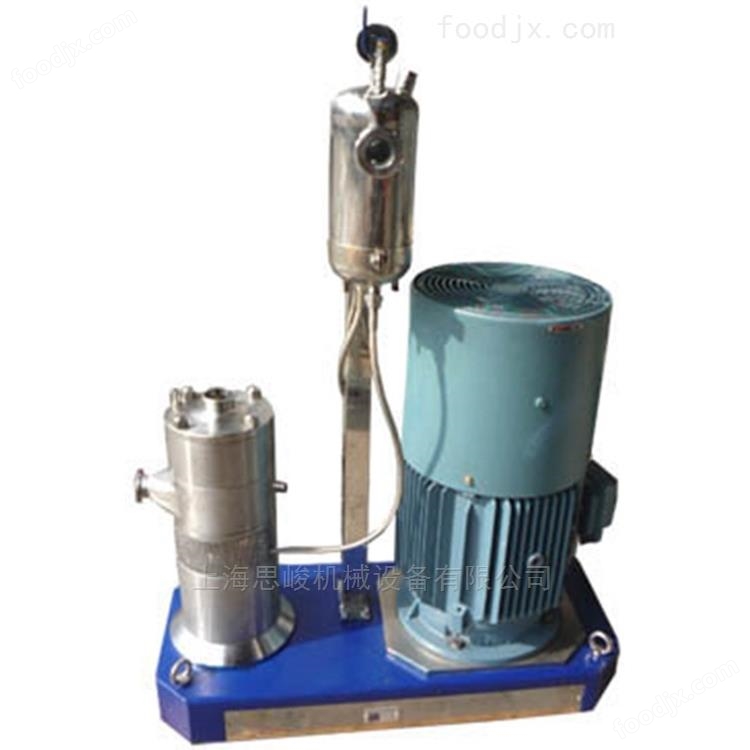

Water phase emulsification method silicone oil emulsifier
NegotiableUpdate on 01/18
- Model
- Nature of the Manufacturer
- Producers
- Product Category
- Place of Origin
Overview
Water phase emulsification silicone oil emulsifying machine. This method is relatively simple to operate and is commonly used in industry, usually carried out at room temperature. The reverse phase emulsification method refers to mixing emulsifiers with amino silicone oil first, and then adding water to achieve the transition from W/O to O/W. This method is suitable for emulsifying high viscosity silicone oil. Gee from Dow Corning conducted a detailed study on this method.
Product Details
Water phase emulsification method silicone oil emulsifier
1. Water phase emulsification method
The aqueous phase emulsification method is to dissolve the emulsifier in water, stir at high speed, and slowly add amino silicone oil to make O/W micro lotion. This method is relatively simple to operate and is commonly used in industry, usually carried out at room temperature.
2. Reverse phase emulsification method
Reverse phase emulsification method refers to the process of mixing emulsifiers with amino silicone oil and then adding water to achieve the transition from W/O to O/W. This method is suitable for the emulsification of high viscosity silicone oil. Gee from Dow Corning conducted a detailed study on this method.
Water phase emulsification method silicone oil emulsifier
Generally speaking, if the concentrated solution is translucent, only a translucent lotion with a particle size of less than 300 nm can be obtained. If the concentrated solution is transparent, a transparent micro lotion with a particle size of less than 140 nm can be obtained. In industrial production, rapid dispersion requires different power mixers, such as ultrasonic mixing, kneading machines, colloid mills, homogenizers, etc. As for the selection of surfactants, Gee believes that the main surfactants can be cationic, anionic, and nonionic, but they must be insoluble in silicone oil and have an HLB value greater than 8. Cationic surfactants * * use ammonium salts, sodium salts, and potassium salts, while anionic surfactants * * are chloride salts. Non ionic surfactants are generally used, and Tergitol series (trimethyl nonyl polyoxyethylene ether) and Triton series (octylphenol polyoxyethylene ether) with different hydrophilic group lengths are used.
Water phase emulsification method silicone oil emulsifier15000 RPM silicone oil high-speed emulsifier, German silicone oil high-speed emulsifier
The factors that affect the dispersion and emulsification results are as follows
1. Forms of emulsion heads (batch and continuous) (continuous is better than batch)
2. Shear rate of emulsion head (the higher, the better the effect)
The tooth structure of the emulsifying head (divided into initial teeth, middle teeth, fine teeth, ultra-fine teeth, with fine teeth having better effect)
4. The residence time of materials in the dispersed wall and the emulsification dispersion time (can be regarded as the same motor, the smaller the flow rate, the better the effect)
5 cycles (the more, the better the effect, and by the end of the device's lifespan, it cannot be any better)
Therefore, high rotational speed and shear rate are crucial for obtaining ultrafine suspensions. According to some industry specific requirements, SGN has developed the GRS2000 high shear dispersing emulsifier based on the GR2000 series. Its shear rate can exceed 15.000 rpm, and the rotor speed can reach 44m/s. Within this speed range, turbulence caused by shear forces combined with specially developed motors can reduce the particle size range to the nanometer level. The grinding and emulsification effect exceeds that of a typical domestic high-pressure homogenizer with a pressure range of 400-500BAR for dispersing and emulsifying grinding

Similar Product Recommend