-
E-mail
mike@sgnprocess.com
-
Phone
13681679740
-
Address
900 Zhudai Road, Jiading District, Shanghai
Product Categories
Shanghai Sijun Machinery Equipment Co., Ltd
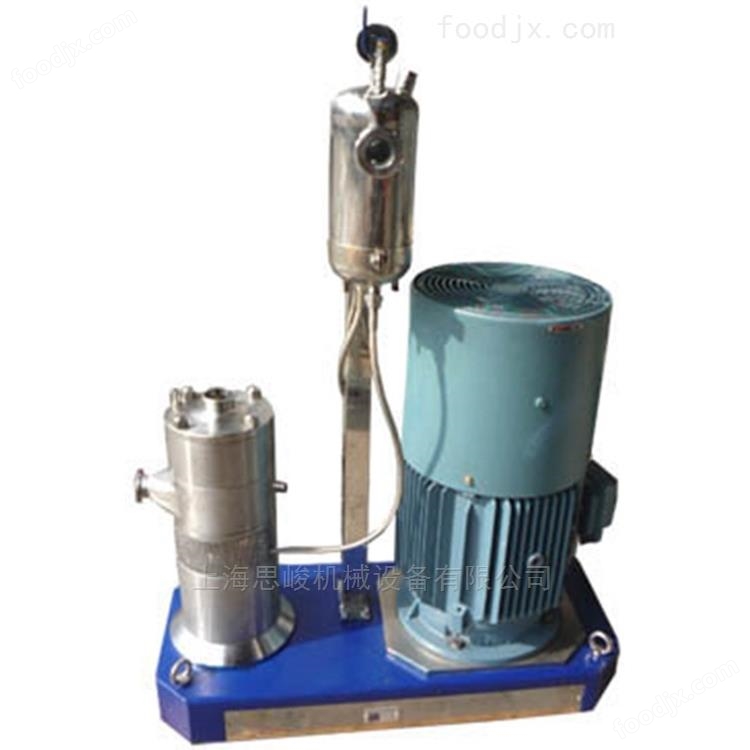

Three stage grinding and dispersing machine for carbon nanotubes
NegotiableUpdate on 01/18
- Model
- Nature of the Manufacturer
- Producers
- Product Category
- Place of Origin
Overview
Nano carbon nanotube three-stage grinding and dispersing machine $r $n Carbon nanotubes are a new type of nanomaterial with excellent mechanical, electrical, thermal and other properties, and good compatibility with polymers. Therefore, using carbon nanotubes to make polyurethane and carbon nanotube composite materials can combine the properties of the two materials, making them more versatile.
Product Details
Three stage grinding and dispersing machine for carbon nanotubes
carbon nanotubeIt is a new type of nanomaterial with excellent mechanical, electrical, thermal and other properties, and good compatibility with polymers. Therefore, using carbon nanotubes to make polyurethane and carbon nanotube composite materials can combine the properties of the two materials, making them more versatile.
However, carbon nanotubes have several large specific surface areas, aspect ratios, and inert surfaces, which are prone to aggregation. This property is not conducive to their uniform dispersion and excellent performance in polymers. After chemical modification treatment, a large number of active groups will be generated on the surface of carbon nanotubes, which is beneficial for improving their dispersibility in the matrix.
Carbon nanotubes were discovered in January 1991 by physicist Sumio Iijima from the NEC laboratory in Tsukuba, Japan, using a high-resolution transmission electron microscope from carbon fibers produced by the arc method. It is a tubular carbon molecule, where each carbon atom on the tube adopts sp2 hybridization and is bonded to each other through carbon carbon sigma bonds, forming a honeycomb structure composed of hexagons as the skeleton of carbon nanotubes. A pair of non hybridized p-electrons on each carbon atom form a conjugated π electron cloud that spans the entire carbon nanotube. According to the different layers of the tube, it is divided into single-walled carbon nanotubes and multi walled carbon nanotubes. The radius direction of the tube is very thin, only at the nanoscale, and tens of thousands of carbon nanotubes combined are only one hair width wide, hence the name carbon nanotubes. And in the axial direction, it can be as long as tens to hundreds of micrometers.
Carbon nanotubes are not always straight, and there may be local irregularities due to the mixing of pentagons and heptagons in the hexagonal structure. In areas where pentagons appear, carbon nanotubes protrude outward due to tension. If the pentagon happens to appear at the top of the carbon nanotube, it forms the seal of the carbon nanotube. The carbon nanotubes are concave inward where a heptagon appears.
Carbon nanotube solution can be used for:
① Supercapacitors
② Catalyst carrier
③ Hydrogen storage materials, etc
Dispersed carbon nanotube solutiondifficultyYes:
In addition to the size effect of typical nanoparticles, carbon nanotubes also have high mechanical strength, good flexibility, and high electrical conductivityDu TeDue to its properties, it has become an ideal reinforcement for polymer composite materials and has a wide range of applications in chemical, mechanical, electronic, aerospace, and other fields. However, due to the tendency of carbon nanotubes to aggregate into bundles or entangle, and their relatively "inert" surface compared to other nanoparticles, their dispersion in common organic solvents or polymer materials is low, which greatly limits their widespread application. Therefore, surface modification of carbon nanotubes has become one of the research hotspots in polymer/carbon nanotube composites. At present, research on surface modification of carbon nanotubes at home and abroad mainly involves introducing covalent and non covalent groups on their surfaces, such as surface chemical reaction modification, surfactant modification, or coating modification of carbon nanotubes with polymer molecules in recent years. Treatment methods such as ultraviolet irradiation and plasma modification were also proposed. Surface modified carbon nanotubes can significantly improve the mechanical, electrical, and thermal properties of polymer composites.
Three stage grinding and dispersing machine for carbon nanotubes
GMD2000 series grinding and dispersing machineIt is a high-tech product composed of a colloid mill and a disperser.
The first level consists of three-level sawtooth protrusions and grooves with increasing precision. The stator can be infinitely adjusted to the desired distance between it and the rotor. Under enhanced fluid turbulence, grooves can change direction at each stage.
The second stage is composed of a stator. The design of the dispersing head also effectively meets the needs of substances with different viscosities and particle sizes. The difference in the design of the stator and rotor (emulsifying head) between online and batch machines is mainly due to the requirements for conveying performance. It is particularly important to note that the difference between coarse precision, medium precision, fine precision, and other types of working heads is not only the arrangement of specified rotor teeth, but also an important difference in the geometric characteristics of different working heads. The number of slots, slot width, and other geometric features can change the different functions of the stator and rotor working heads. According to past practice, designate a work head based on past experience to meet a specific application. In most cases, the construction of the machine is matched with the specific application, so it is important for manufacturing the final product. When it is uncertain whether the construction of a working head meets the expected application.
GMD2000 series grinding and dispersing machineCharacteristics:
① The linear velocity is very high, and the shear gap is very small. When the material passes through, the frictional force formed is relatively intense, resulting in what is commonly known as wet grinding
② The fixed rotor is made into a circular cone shape, with three-level sawtooth protrusions and grooves with increasing precision.
③ The stator can be infinitely adjusted to the desired distance between it and the rotor
④ Under enhanced fluid turbulence, grooves can change direction at each stage.
⑤ High quality surface polishing and structural materials can meet various requirements of different industries.
Three stage grinding and dispersing machine for carbon nanotubes
GMD2000 Series Equipment Selection Table
model |
traffic L/H |
speed rpm |
linear velocity m/s |
power kw |
Import/Export Connection DN |
GMD2000/4 |
300 |
9000 |
23 |
2.2 |
DN25/DN15 |
GMD2000/5 |
1000 |
6000 |
23 |
7.5 |
DN40/DN32 |
GMD2000/10 |
2000 |
4200 |
23 |
22 |
DN80/DN65 |
GMD2000/20 |
5000 |
2850 |
23 |
37 |
DN80/DN65 |
GMD2000/30 |
8000 |
1420 |
23 |
55 |
DN150/DN125 |
GMD2000/50 |
15000 |
1100 |
23 |
110 |
DN200/DN150 |
Thank you for your interest in our products. If you would like to obtain further information, such as the price of carbon nanotube solution grinding and dispersing machines, specifications and models of carbon nanotube solution grinding and dispersing machines, etc., please feel free to contact us at any time. We sincerely invite you to provide * * satisfactory service!
Similar Product Recommend