-
E-mail
mike@sgnprocess.com
-
Phone
13681679740
-
Address
900 Zhudai Road, Jiading District, Shanghai
Product Categories
Shanghai Sijun Machinery Equipment Co., Ltd
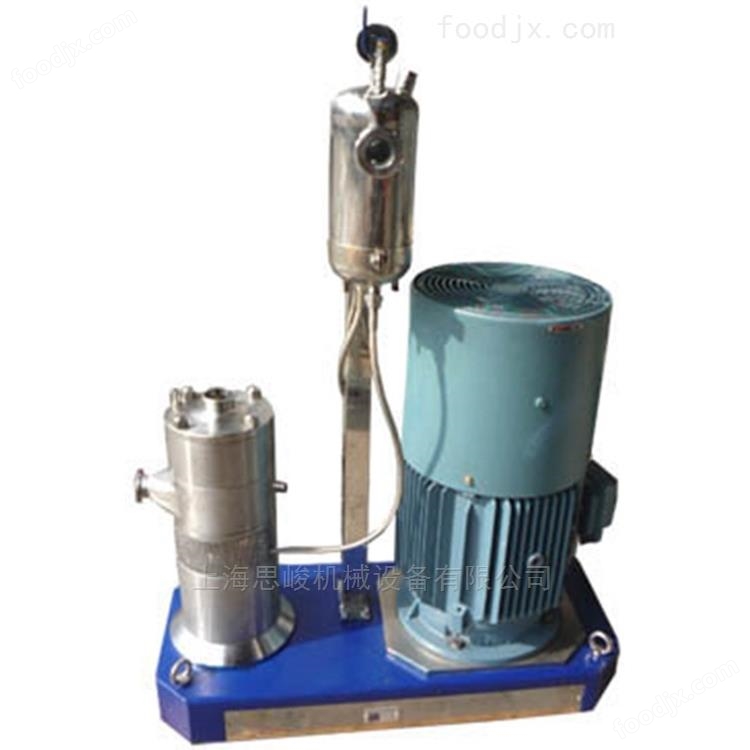
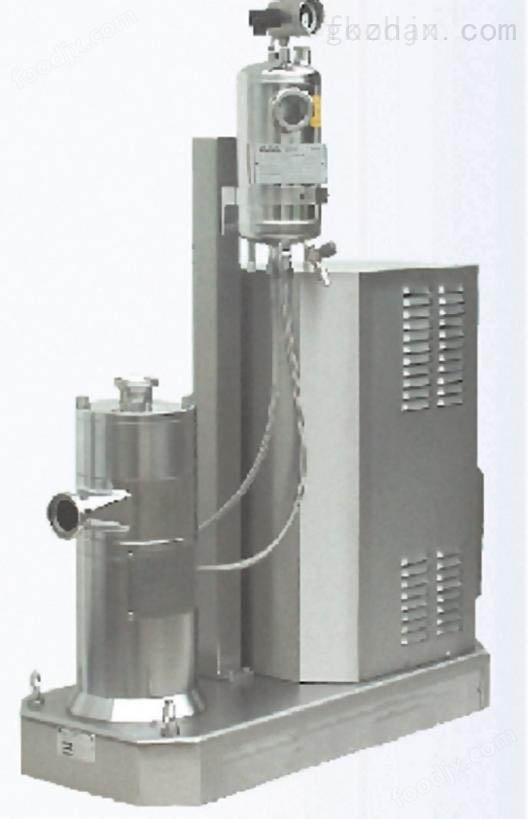
Gas phase silica disperser
NegotiableUpdate on 01/18
- Model
- Nature of the Manufacturer
- Producers
- Product Category
- Place of Origin
Overview
Gas phase silica disperser $r $n Gas phase silica is one of the extremely important high-tech ultrafine inorganic new materials. Due to its small particle size, it has a large specific surface area, strong surface adsorption force, high surface energy, high chemical purity, good dispersion performance, and specific properties such as thermal resistance and electrical resistance. With its stability, reinforcement, thickening, and thixotropy, it has unique characteristics in many disciplines and fields and plays an irreplaceable role. Gas phase silica, commonly known as "ultrafine white carbon black", is widely used in various industries as an additive, catalyst carrier, petrochemical, decolorizing agent, matting agent, rubber reinforcing agent, and plastic filling agent
Product Details
Gas phase silica disperser
Gas phase silicaIt is one of the extremely important high-tech ultrafine inorganic new materials. Due to its small particle size, it has a specific surface areaLarge, strong surface adsorption force, high surface energy, high chemical purity, good dispersibility, thermal resistanceHas specific properties in resistance and other aspects, with its excellent stability, reinforcement, thickening, and thixotropyIt has unique characteristics in many disciplines and fields and plays an irreplaceable role. Fumed silica, commonly known as' ultrafine white carbon black ', is widely used in various industries as an additive and catalyst carrierPetrochemical industry, decolorizing agent, matting agentRubber reinforcing agent, plastic filling agent, ink thickening agentMetal soft polishing agent, insulation and thermal insulation filler, advanced daily cosmetic filler and spray coating materialVarious fields such as medicine, environmental protection, etc. And it provides a new material foundation and technological guarantee for the development of related industrial fields. Due to its unique functions in magnetism, catalysis, light absorption, thermal resistance, and melting point compared to conventional materials, it has received great attention from people.
Resin based composite materials have the characteristics of lightweight, high strength, and corrosion resistance. However, in recent years, the material industry and the pillar industries of the national economy have increasingly high requirements for the performance of resin based materials. How to synthesize high-performance resin based composite materials has become an important issue in the current material industry and business community. The emergence of gas-phase silica has provided new opportunities for the synthesis of resin based composite materials and a new way for the modification of traditional resin based materials. As long as the gas-phase silica particles can be fully and uniformly dispersed into the resin material, the goal of fully improving the performance of the resin based material can be achieved.
1. Improve strength and elongation. Epoxy resin is a basic resin material. Adding gas-phase silica to epoxy resin is structurally different from adding coarse-grained silica (such as white carbon black) to epoxy resin based composite materials. coarse-grained SiO2 is generally added as a reinforcing agent and mainly distributed in the interchain of high molecular weight materials. However, due to its severe coordination deficiency, large specific surface area, and surface oxygen deficiency, gas-phase silica exhibits strong activity and can easily bond with the oxygen of epoxy cyclic molecules, improving the intermolecular bonding force. At the same time, there are still some gas-phase silica particles distributed in the gaps of polymer chains. Compared with coarse-grained SiO2 particles, it shows high flow ripple. The addition of gas-phase silica significantly improves the strength, toughness, and ductility of epoxy resin materials.
2. Improve wear resistance and enhance the surface smoothness of materials. Gas phase silica particles are 100-1000 times smaller than SiO2, and adding them to epoxy resin is beneficial for pulling them into fibers. Due to the high fluidity and small size effect of fumed silica, the material surface becomes denser and cleaner, the friction coefficient decreases, and the high strength of nanoparticles greatly enhances the wear resistance of the material.
3. Anti aging performance. One of the fatal weaknesses of epoxy resin matrix composites in use is the poor anti-aging performance, which is mainly due to the ultraviolet medium and long wave effects of 280-400nm of solar radiation. Its destructive effect on resin matrix composites is very serious. The degradation of polymer chains causes rapid aging of resin matrix composites. And gas-phase silica can strongly reflect ultraviolet rays. Adding it to epoxy resin can greatly reduce the degradation effect of ultraviolet rays on epoxy resin, thereby achieving the goal of delaying material aging.
The traditional dispersion methods of silica mainly include:
Grinding and dispersingUsing the different speeds of the rollers in a three roll or multi roll machine, the grinding material is fed into the feeding groove between the feeding roller (rear roller) and the middle roller. The two rollers rotate inward at different speeds, and some of the grinding material enters the feeding gap and is subjected to strong shear force. Through the feeding gap, the grinding material is divided into two parts. One part is attached to the feeding roller and returns to the feeding groove, and the other part is carried by the middle roller to the paint scraping gap between the middle roller and the front roller, where it is once again subjected to stronger shear force. After scraping the paint seam, the grinding material is divided into two parts. One part is carried by the front roller to the scraping point and falls into the scraping plate, while the other part returns to the feeding groove. After several cycles, the purpose of dispersion can be achieved. However, using a three roll or multi roll machine for processing has low efficiency, high energy consumption, and cannot meet the needs of large-scale production.
Ball milling dispersionThrough the rolling and collision between the grinding balls in the ball mill and between the grinding balls and the cylinder body, the powder particles in contact with the steel balls are crushed or ground, and the mixture is uniformly dispersed by highly turbulent mixing in the gaps between the balls.
Sand grinding dispersion: Sand grinding is an extension of ball milling. However, the grinding medium is made of fine beads or sand. The sand mill can feed continuously. When the premixed slurry of nano powder passes through the cylinder, it is subjected to the violent impact and shear action of the intensely stirred sand particles in the cylinder, so that the nano oxide can be well dispersed in the coating. The dispersed slurry leaves the sand particle grinding area and passes through the outlet screen, overflowing and discharging. The outlet screen can block the sand particles and return them to the cylinder. Good dispersion effect and material fineness can be achieved through ball mill and sand mill dispersion, but ball mill and sand mill cannot avoid the disadvantages of low processing efficiency and high energy consumption.
Introduction to dispersion effect:Dispersion is a thermodynamically unstable system composed of at least two incompatible liquids. One liquid is dispersed in spherical units in another liquid, so the more stable the dispersion, the better the dispersion effect.
From the perspective of equipment, there are several factors that affect the dispersion effect, including:
1.The forms of dispersed heads (batch and continuous) (continuous is better than batch)
2.The shear rate of the dispersing head, the larger the effect, the better
3.The tooth structure of the dispersing head (divided into initial teeth, middle teeth, fine teeth, ultra-fine teeth, and finer teeth for better effect)
4.The residence time and dispersion time of materials on dispersed walls (can be regarded as equivalent motors, the smaller the flow rate, the better the effect)
5.The more cycles (the better the effect, and by the end of the device's lifespan, it cannot be any better)
Gas phase silica disperser
Calculation of linear velocity:
The definition of shear rate is the relative velocity of the liquid layer between two surfaces.
Shear rate (s-1)=v rate(m/s)
gfixed-Rotor spacing(m)
As can be seen from the above, the shear rate depends on the following factors:
Linear velocity of rotor
In this case, the distance between the two surfaces is the rotor stator spacing.
IKN fixed-The spacing range of the rotor is0.2 ~ 0.4 mm
rateV= 3.14 X D(rotor diameter)XspeedRPM / 60
So the rotational speed and dispersion head structure are important factors affecting dispersion, and the high rotational speed and shear rate of the ultra-high speed dispersion homogenizer disperser are crucial for obtaining ultrafine suspensions
Similar Product Recommend