-
E-mail
mike@sgnprocess.com
-
Phone
13681679740
-
Address
900 Zhudai Road, Jiading District, Shanghai
Product Categories
Shanghai Sijun Machinery Equipment Co., Ltd
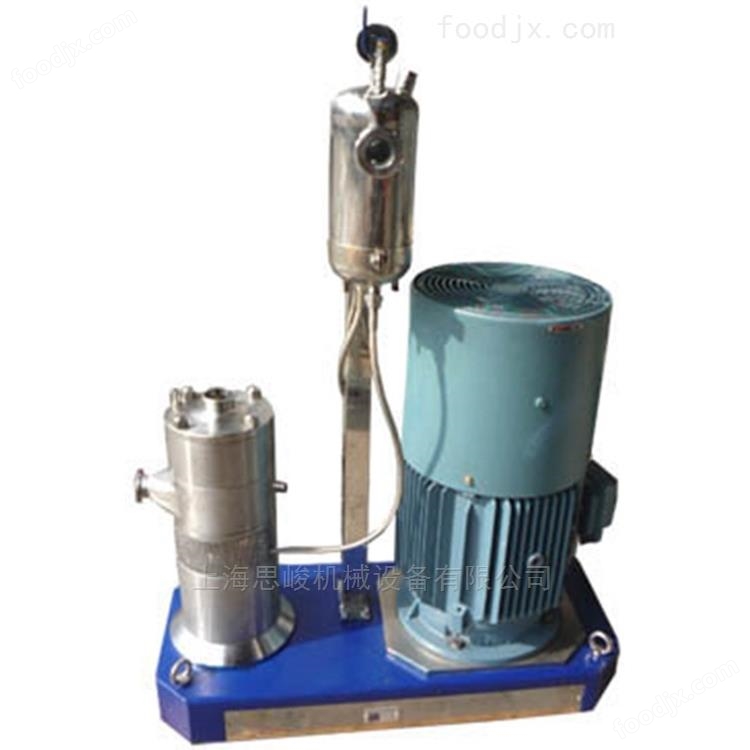

Coal flotation reagent emulsifier
NegotiableUpdate on 01/18
- Model
- Nature of the Manufacturer
- Producers
- Product Category
- Place of Origin
Overview
The coal flotation reagent emulsifier $r $nGRS2000 adopts an upright design, which allows all materials to enter the dispersion chamber, meets process requirements and fluid mechanics requirements, and increases its working efficiency. The discharge design at the low outlet meets production requirements, and the vertical pressure makes the machine work more stably and easy to clean. Taking into full consideration the standards of FDA and EHEDG, the materials in contact with GRS2000 are made of SS316 steel or more acid and alkali resistant Hastelloy alloy according to production requirements, greatly enhancing its wear and corrosion resistance, and preventing physical and chemical changes between equipment and materials that may cause pollution.
Product Details
Coal flotation reagent emulsifier
Flotation reagent configuration, diluting solid reagents into liquid for easy addition. Chemicals with poor water solubility, such as yellow medicine, amine black medicine, water glass, sodium carbonate, copper sulfate, sodium sulfide, etc., are prepared into aqueous solutions and added at concentrations ranging from 2% to 10%. Agents that are insoluble in water should be dissolved in a solvent first, and then prepared into an aqueous solution for addition, such as amine collectors. Some can be directly added, such as 2 # oil, 31 # black medicine, oleic acid, etc. For drugs that are easily soluble in water and require a large amount of dosage, the concentration is generally 10-20%, such as sodium sulfide, which is formulated at 15% when used. For drugs that are difficult to dissolve in water, organic solvents can be used to dissolve them and then prepare them into low concentration solutions.
The selection of medication preparation methods mainly depends on the properties, addition methods, and functions of the medication. Due to different preparation methods, the dosage and effectiveness of the same medication can vary greatly. Generally, the preparation methods include:
① Formulated into a 2% to 10% aqueous solution, most water-soluble agents are prepared in this way (such as yellow medicine, copper sulfate, water glass, etc.)
② When preparing with solvents, some water-insoluble drugs can be dissolved in special solvents. For example, Baiyao is insoluble in water but soluble in 10% to 20% aniline solution. After preparing it into an aniline mixed solution, it can be used; For example, aniline black powder is insoluble in water, but can be dissolved in alkaline solutions of sodium hydroxide. Therefore, when using aniline black powder, the alkaline solution of sodium hydroxide should be prepared first, and then the agent should be added to prepare the aniline black powder solution and added to the flotation machine.
③ Formulated into suspension or emulsion, for some insoluble solid drugs, they can be formulated into emulsion for use. If the solubility of lime in water is very low, lime can be ground into powder and mixed with water to form an emulsion suspension (such as lime milk), or it can be directly added to the ball mill and mixing tank in dry powder form.
④ Saponification is a common method for fatty acid collectors. For example, when selecting hematite, a combination of oxidized paraffin soap and tar oil is used as a collector. To saponifie Tal oil, about 10% sodium carbonate is added and heated to make a hot soap solution when preparing the medicine.
⑤ Emulsification, the method of emulsification is to use ultrasonic emulsification or mechanical strong stirring for emulsification. After emulsification, fatty acids and diesel can increase their dispersion in the slurry and improve the effectiveness of the agent. Adding some emulsifier agents will have a better effect. Many surface active substances can be used as emulsifiers.
⑥ Acidification, when using cationic collectors, due to its poor solubility, must be pretreated with hydrochloric acid or acetic acid before it can be dissolved in water for flotation.
⑦ Aerosol method is a new preparation method to strengthen the role of agents. Its essence is to use a special spray device to atomize agents in the air medium and directly add them to the flotation cell, so it is also called "aerosol flotation method". Adopting this method not only improves the floatability of useful minerals, but also significantly reduces the dosage of reagents. If the amount of collector is only 1/3 to 1/4 of the usual amount, and the amount of foaming agent is only 1/5.
⑧ Electrochemical treatment of reagents, by applying direct current to flotation reagents in solution, can change the state of the reagents themselves, the pH value of the solution, and the oxidation-reduction potential value, thereby achieving the purpose of increasing the concentration of active reagent components, increasing the critical concentration for forming colloidal particles, and improving the dispersion degree of insoluble reagents in water.
Usually, capturing agents and foaming agents can be stirred for 1-2 minutes, while some agents require long-term stirring, such as potassium dichromate for copper lead separation to suppress lead.
The pipeline type high shear emulsifier from Shanghai Sijun Machinery Equipment Co., Ltd. can easily emulsify and homogenize diesel kerosene or other chemicals, and the equipment can operate for 24 hours.
Coal flotation reagent emulsifier
Structural design of SGN emulsifier:
The GRS2000 adopts an upright design, allowing all materials to enter the dispersion chamber, which meets the process requirements and fluid mechanics requirements, increasing its work efficiency. The discharge design at the lower outlet meets production requirements, and the vertical pressure makes the machine work more stably and easy to clean. Taking into full consideration the standards of FDA and EHEDG, the materials in contact with GRS2000 are made of SS316 steel or more acid and alkali resistant Hastelloy alloy according to production requirements, greatly enhancing its wear and corrosion resistance, and preventing physical and chemical changes between equipment and materials that may cause pollution. Adopting a three-layer structure cartridge type mechanical seal design, it can be quickly installed, has high reliability, and is suitable for the pharmaceutical industry.
GRS2000Comparison between product series and horizontal emulsifier:
1. Rotational speed and shear force:
Domestic emulsifier, the speed of the 3000/4700 RPM direct coupled motor determines the rotor speed
Linear speed: V=3.14X0.55X3000/60=9M/S V=3.14X0.55X4700/60=14M/S
Force: F=9/0.3X1000-=30000S-1 F=14/0.3X1000=42000S-1
GRS2000 product series, 9000/14000RPM accelerated by belt
Linear velocity: V=3.14X0.055X90000/60=26M/S V=3.14X0.055X14000/60=44M/S
Force: F=23/0.2X1000=115000S-1 F=40/0.2/X1000=200000S-1
Force is an important factor in emulsification and homogenization, with the latter being 4-5 times greater than the former
2. Equipment design and construction:
Domestic emulsifiers have a bedroom direct connection structure, which runs for a long time and can easily cause shaft eccentricity and abnormal operation. Professional personnel are needed to dismantle the internal structure for replacement. And it is necessary to replace the damaged emulsifying head and shaft.
Nano material disperserThe GRS2000 product series features a vertical split structure, which has a long operating time and is not prone to shaft eccentricity. It is easy to replace and can be operated by ordinary personnel as long as the corresponding belt is replaced.
3. Sealing:
Domestic emulsifiers, packing seals or skeleton seals, single mechanical seals or shaft seals have a high leakage failure rate, and product leakage enters the motor, causing the motor to burn out
Nano material disperserThe GRS2000 product series features dual mechanical seals that are easy to clean and reduce leakage to a minimum. It can operate continuously for 24 hours and is equipped with a special German PDFE shaft seal that can run for 10000 hours. High quality German mechanical seals can be selected. In general, our mechanical seals can withstand a pressure of 16 bar, which is generally 2-3 bar higher than the pressure of the sealing chamber. This determines that our inlet pressure can reach 12-13 bar.
4. Product effect:
Domestic emulsifiers have limited particle size and fineness, making it difficult to achieve particle sizes below 10 microns. The repeatability is poor, and the product particle size distribution is uneven
Nano material disperserThe GRS2000 product series can achieve particle processing of 0.1-1 microns, with uniform particle size distribution and nanoscale dispersion emulsification
5Nano material disperserCharacteristics of GRS2000 product series:
① It has a very high shear speed and shear force, and a particle size of about 0.1-1 micron can ensure the stability of high-speed dispersion and emulsification.
② This device can be applied to various dispersion emulsification processes, as well as for the production of homogeneous mixtures including emulsions, suspensions, and colloids.
③ The shear force generated by the stator and rotor systems of the three-stage emulsifier increases the solute transfer speed, thereby accelerating the decomposition of single molecules and macroscopic molecular media
Similar Product Recommend